Under the Bodhi Tree:
How the Prince-Turned-Ascetic Became a Buddha
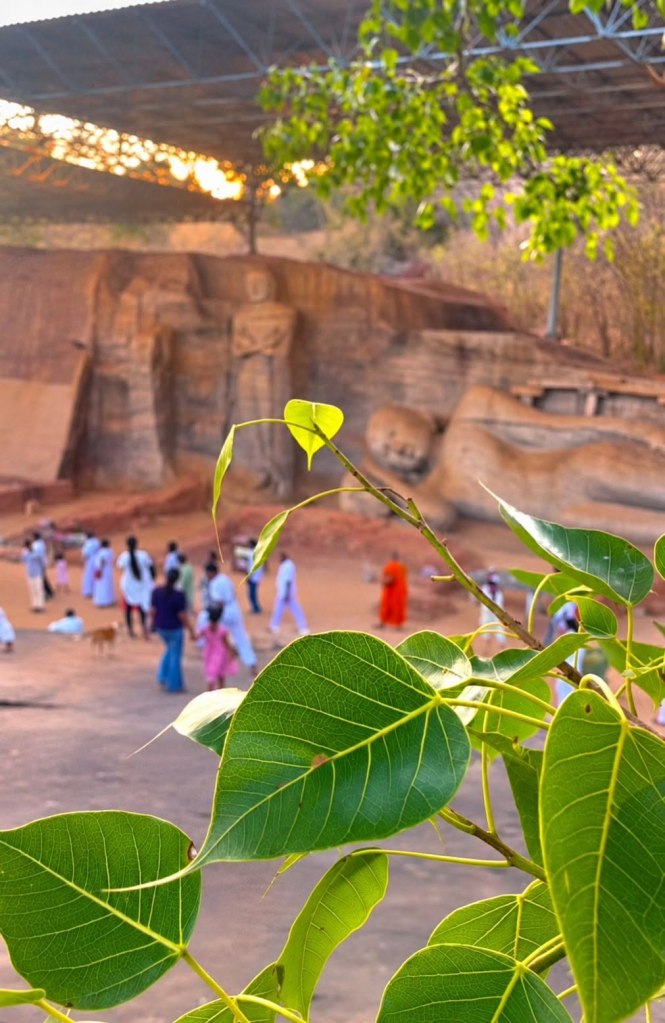
The image of the Buddha seated beneath the Bodhi tree is one of the most iconic images in the history of religions. In classical iconography, he appears as a young and smiling ascetic, immersed in meditation until the moment of awakening. The canonical texts, however, describe a much more complex and profound dynamic.
According to the Mahāvagga of the Vinaya Piṭaka (Khandhaka), after attaining Awakening on the banks of the Nerañjarā River, near Uruvelā (Bodhgaya), the newly awakened Buddha remained in the vicinity of the Bodhi tree for several weeks, spending this period in meditative absorption (samādhi). The Bodhi Sutta (Udāna 1.1) recounts that, during the first watch of the night of the Awakening, emerging from samādhi, the Buddha contemplated Paṭiccasamuppāda, Dependent Origination, in its direct sequence (anuloma):
“When this exists, that comes to be; with the arising of this, that arises. That is to say: With ignorance as condition, formations come to be; with formations as condition, consciousness comes to be; with consciousness as condition, name-and-form comes to be; with name-and-form as condition, the six sense bases come to be; with the six sense bases as condition, contact comes to be;with contact as condition, feeling comes to be; with feeling as condition, craving comes to be; with craving as condition, clinging comes to be;with clinging as condition, being comes to be; with being as condition, birth comes to be; with birth as condition, aging and death come to be, together with sorrow, lamentation, pain, grief, and despair. Thus arises this entire mass of suffering.”
During the second watch, he contemplated the same principle in reverse sequence (paṭiloma):
“When this does not exist, that does not come to be; with the cessation of this, that ceases. That is to say:
With the complete cessation of ignorance, formations cease; with the cessation of formations, consciousness ceases; with the cessation of consciousness, name-and-form ceases; with the cessation of name-and-form, the six sense bases cease; with the cessation of the six sense bases, contact ceases; with the cessation of contact, feeling ceases; with the cessation of feeling, craving ceases; with the cessation of craving, clinging ceases; with the cessation of clinging, being ceases; with the cessation of being, birth ceases; with the cessation of birth, aging and death cease, together with sorrow, lamentation, pain, grief, and despair. Thus ceases this entire mass of suffering.”
Finally, during the third watch, he returned once again to a complete contemplation of the process, fully comprehending both its arising and its cessation. At the end of each contemplation, he uttered an inspired exclamation (udāna), in which he declared that when reality is directly understood, all doubts disappear. Udānas 1.2 and 1.3 continue by describing the Buddha still seated at the foot of the Bodhi tree, immersed in the bliss of liberation. He celebrates the happiness of detachment, the absence of hatred and craving, and the peace of one who has transcended attachment to the notions of “I” and “mine.”
The Ariyapariyesanā Sutta (Majjhima Nikāya 26) likewise confirms that, after the Awakening, the Buddha remained for some time immersed in the bliss of liberation before deciding whether or not to teach the Dhamma. Gautama reflected on the depth of the discovery he had just realized and on the difficulty of communicating his insights:
“This Dhamma that I have attained is profound, difficult to see, difficult to understand, peaceful, sublime, beyond reasoning, subtle, to be known only by the wise.”
The Buddha feared that beings, blinded by attachment to sensual pleasures, would be unable to understand the principle of Dependent Origination. Only after the request of Brahmā Sahampati did he decide to teach, for the benefit of those who had “little dust in their eyes.”
The Gotama Sutta of the Saṃyutta Nikāya reiterates that the Tathāgata’s fundamental discovery consisted precisely in understanding the arising and cessation of conditioned phenomena. The Buddha does not present awakening as a divine revelation, but as the perfect knowledge of the natural law of conditionality.
The Mahāvagga of the Vinaya provides further details concerning the weeks following the Awakening. After the first week spent at the foot of the Bodhi tree, the Buddha remained in the vicinity of Bodhgayā, staying in various places and continuing to dwell in samādhi. The Buddha’s meditation did not consist in seeking visions or mystical experiences, but rather in directly observing the structure of reality (mulapariyaya): every phenomenon arises dependent upon conditions and, when those conditions cease, it inevitably ceases. This insight, repeatedly contemplated both in the direction of arising (anuloma) and in the direction of cessation (paṭiloma), constitutes the very heart of his Awakening.
Gautama realized that the various forms of suffering (dukkha) connected with birth (jāti), aging (jarā), and death (maraṇa), to which all beings are subject, depend upon conceiving oneself as an autonomous and permanent self at the center of the universe (i.e., being or bhava). This condition, in turn, arises from clinging (upādāna) to the material and mental aggregates, internal and external, which serve as the raw material for the genesis of the self.
Gautama understood that this state of affairs is the product of a mistaken perception, dictated by ignorance (avijjā) of the way things truly are. When this distorted perception is shaken by the natural changes of life, the presumed stability and sense of security that we project onto our existence collapse, plunging us into chaos. This is the vicious cycle of dukkha in its various forms. If this kind of suffering is not understood, it will lead to further suffering in an endless spiral.
In such a situation, an ordinary person will attempt to rid themselves of dukkha by ignoring it, trying to sublimate it through sensual enjoyment (kāma), or seeking to eliminate it through repression. But in doing so, they will only create further frustration.
Gautama understood that the key to disabling this vicious cycle is to become aware of reality as it truly is. Understanding the true nature of things will replace mistaken perception, causing the metapsychological structure upon which dukkha rests to collapse. Nibbāna, the cessation of these processes, is the natural result of such realization. The path of the Dhamma is precisely the collection of methods devised by the Buddha himself to lead beings gradually toward this goal.
For this reason, Paṭiccasamuppāda occupies a central position in the Buddha’s teaching. As mentioned above, the canonical tradition shows that the first seven weeks after the Awakening were devoted to samādhi and to contemplation of the law of Dependent Origination—the discovery that would subsequently form the foundation of all the Dhamma he taught over the following forty-five years.
Davide Puglisi
Dhammadāna Group – Italy


Rispondi